White work satin stitch is embroidery done with white thread on white fabric. It’s considered an elegant technique because white on white looks so delicate and refined. It’s especially popular for wedding gowns, since white has long been a symbol of purity and beauty.
In this section you’ll learn how white satin stitch is worked and find detailed charts with instructions.
White Satin Stitch Peonies
Charts for white satin stitch embroidery are no different from standard satin stitch charts. They use exactly the same stitches as regular satin work.
White Peony No. 1

White satin stitch looks very delicate when embroidering flowers, but this little peony will take a bit of skill and experience with the technique.
You will need:
- a #12 embroidery needle
- embroidery fabric (white linen or cotton)
- DMC cotton perle floss, art. 115, sizes 3 and 5
- DMC cotton perle floss, art. 116, size 8
The thread amounts in the table are calculated for a finished motif measuring 16 by 16 cm.
The following stitches were used for this design:
French knot, padded satin stitch (“puff” stitch), long and short stitch, chain stitch, stem stitch, and rococo stitch. You’ll find full instructions for all these stitches in this section. On the chart, letters mark the stitch types and numbers mark the thread color and size.

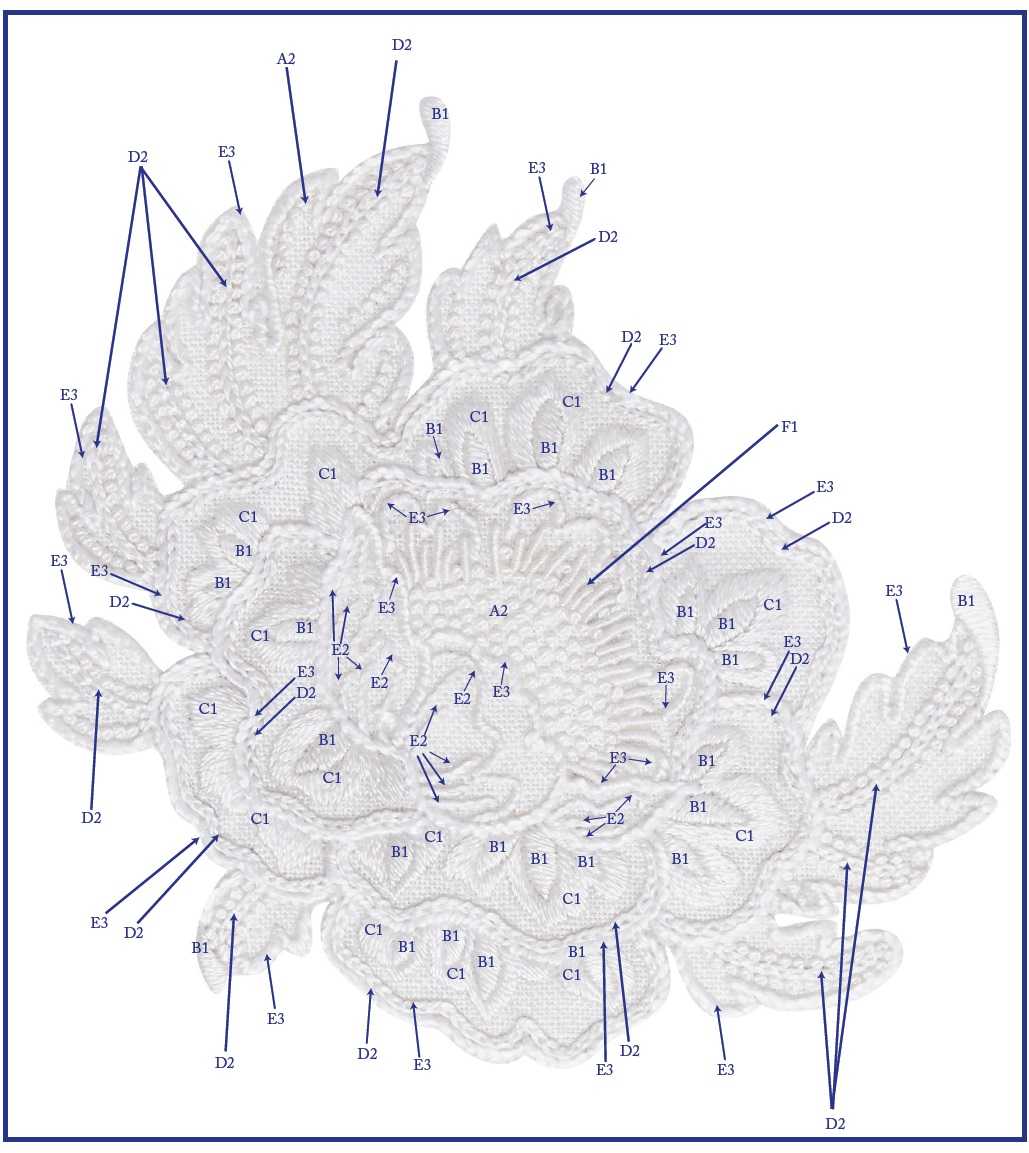
You can download this design and transfer it onto your fabric.
White Peony No. 2
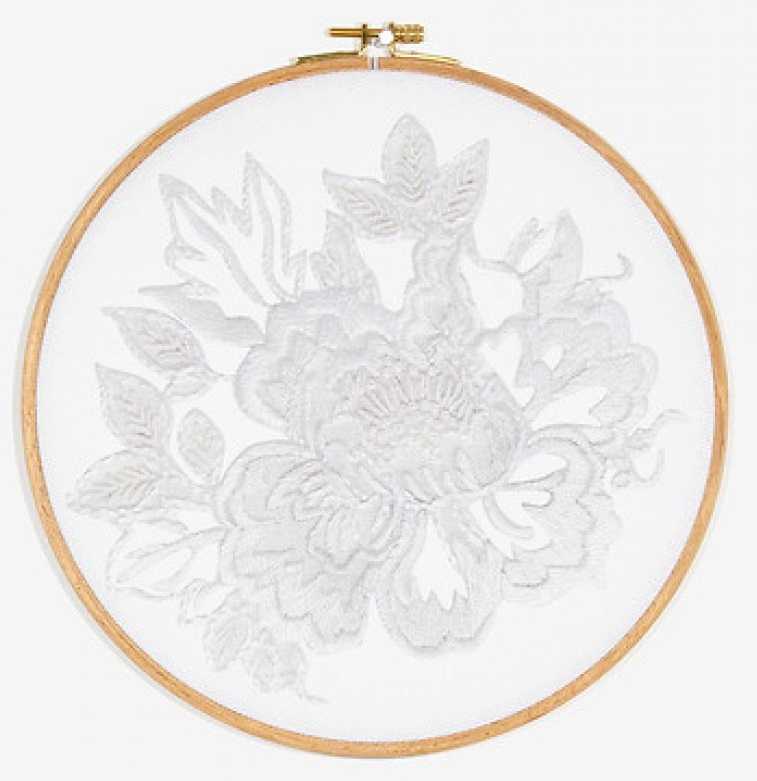
Here’s another peony design and how it’s worked in white satin stitch.
You’ll need the same tools and materials as for the previous motif.
The finished embroidery also measures 16 by 16 cm, and the thread key is the same, with one difference: here we don’t use chain stitch.
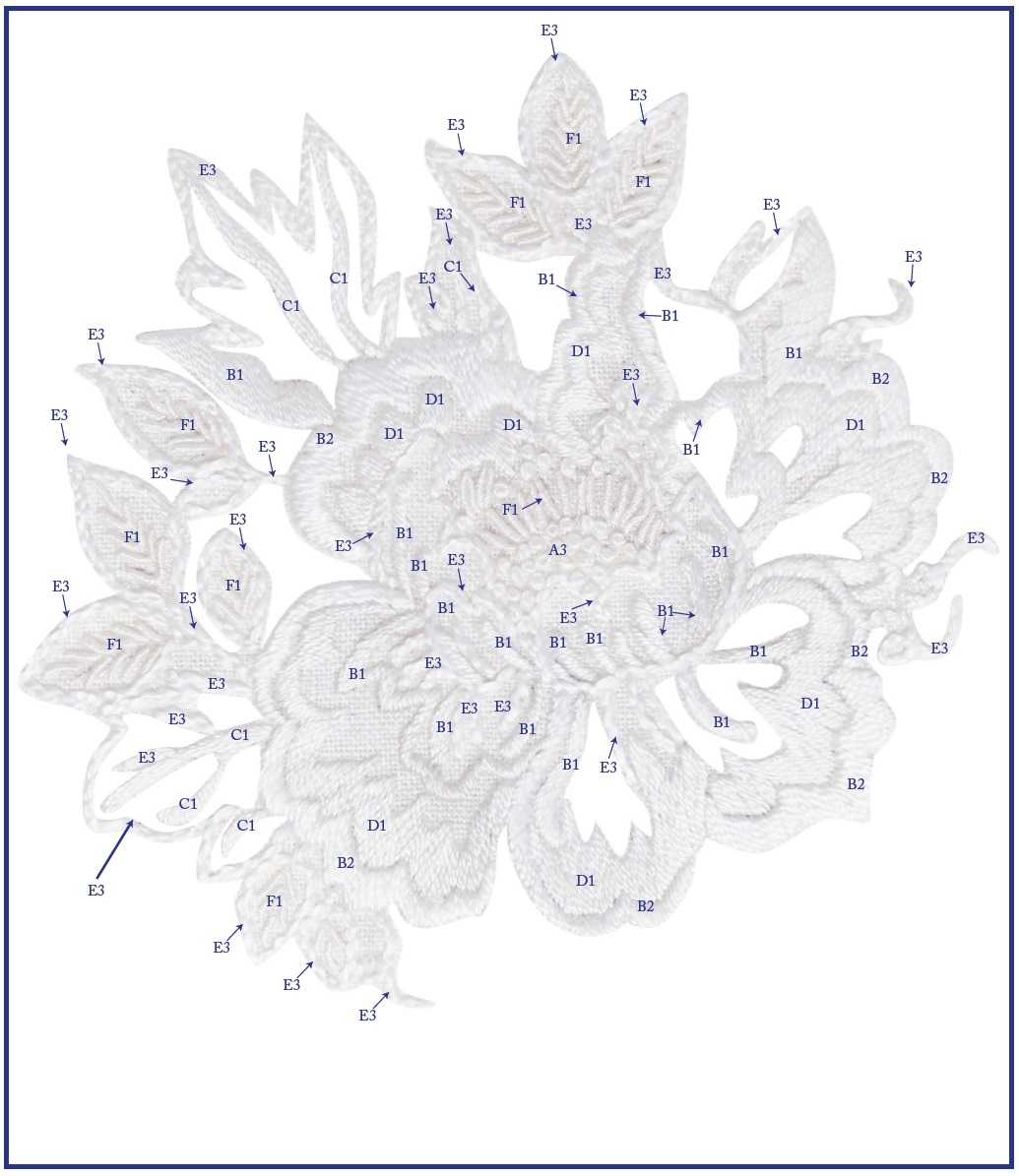
On the chart, letters mark the stitch types and numbers mark the thread thickness and type (see the previous motif for details).
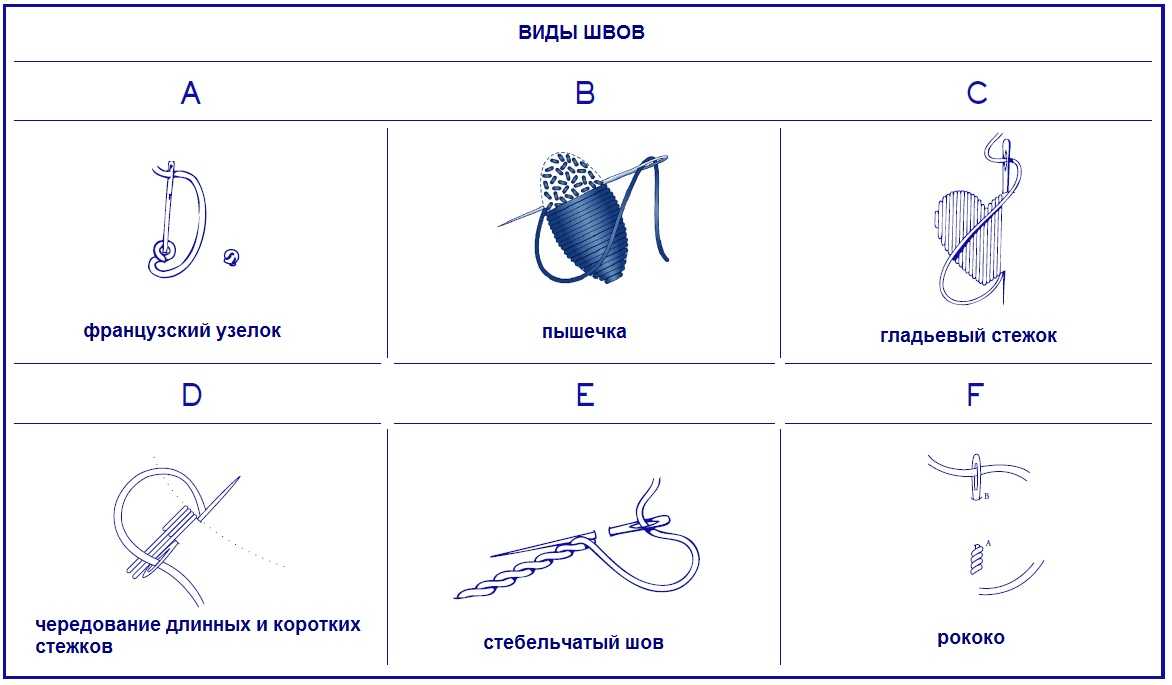
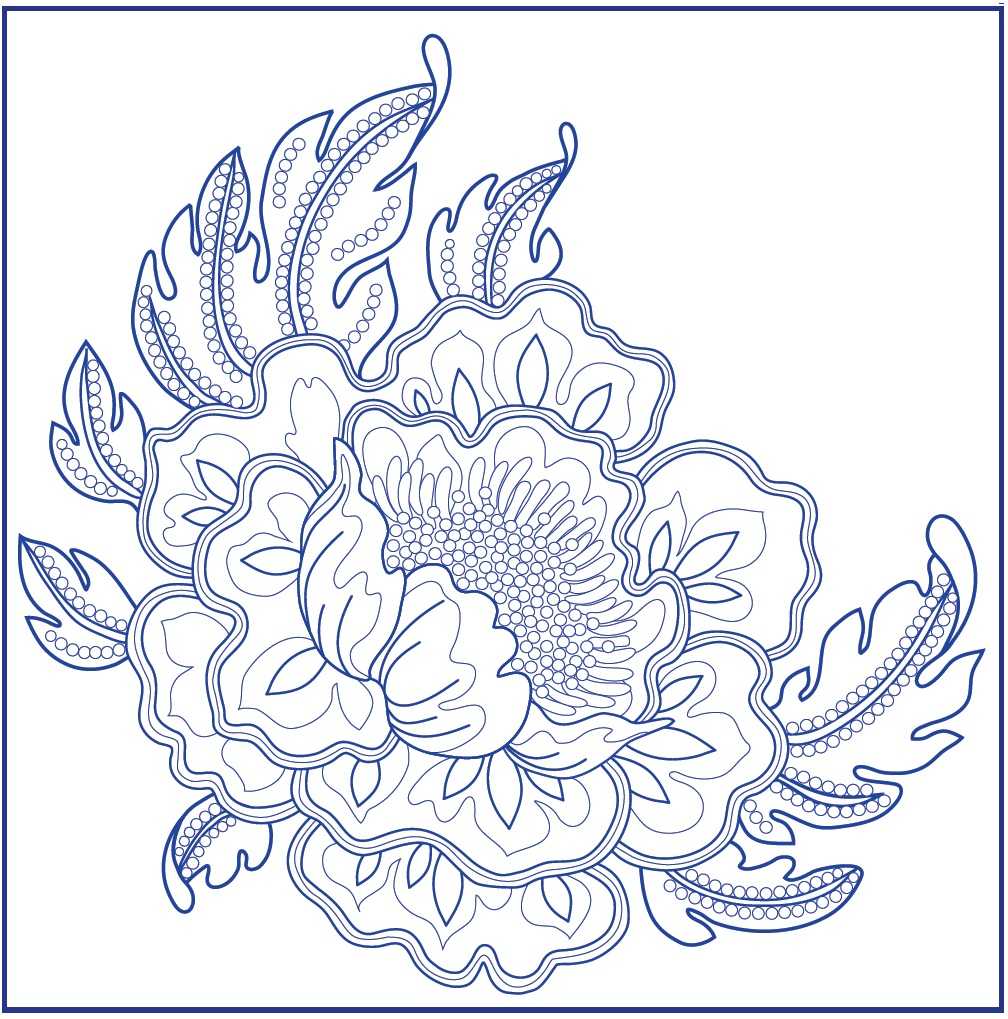
Download the outline template for this white satin stitch design and transfer it to your fabric. As you work, check the stitch key often so you don’t get confused.

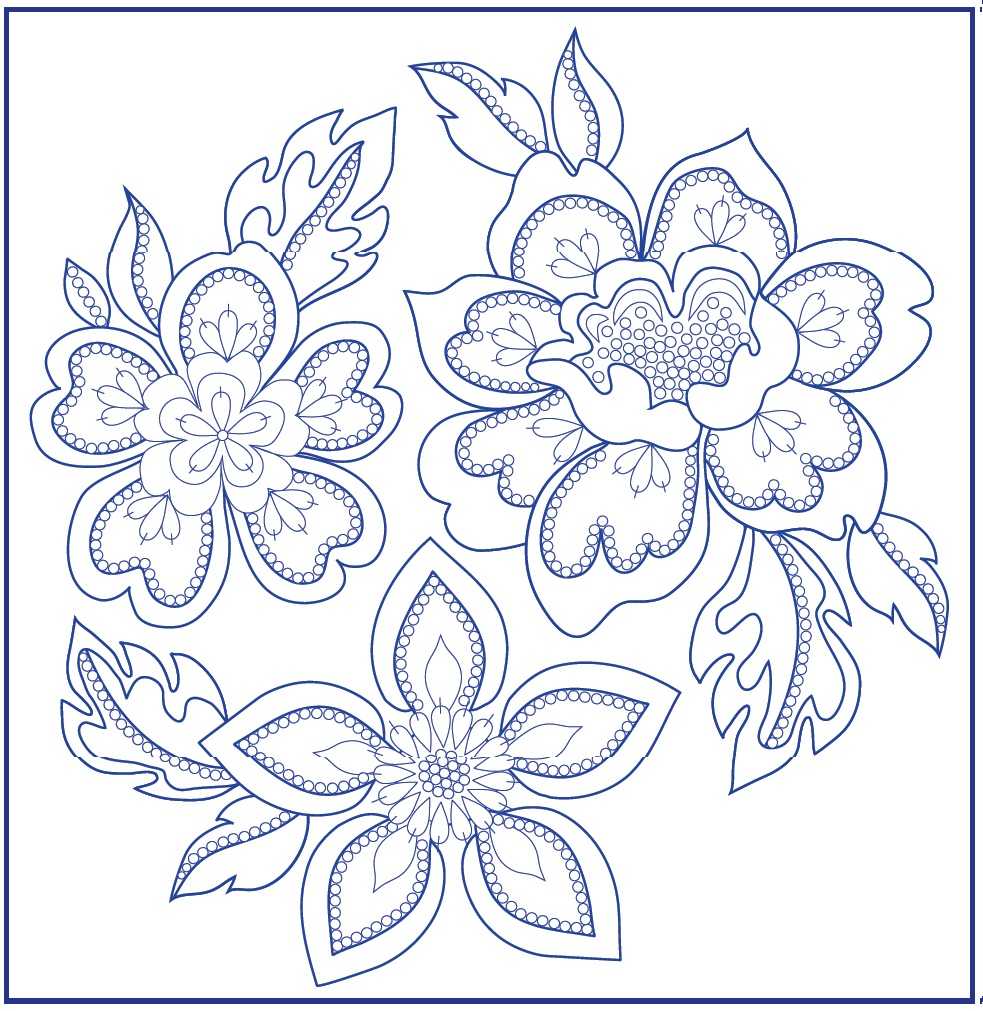
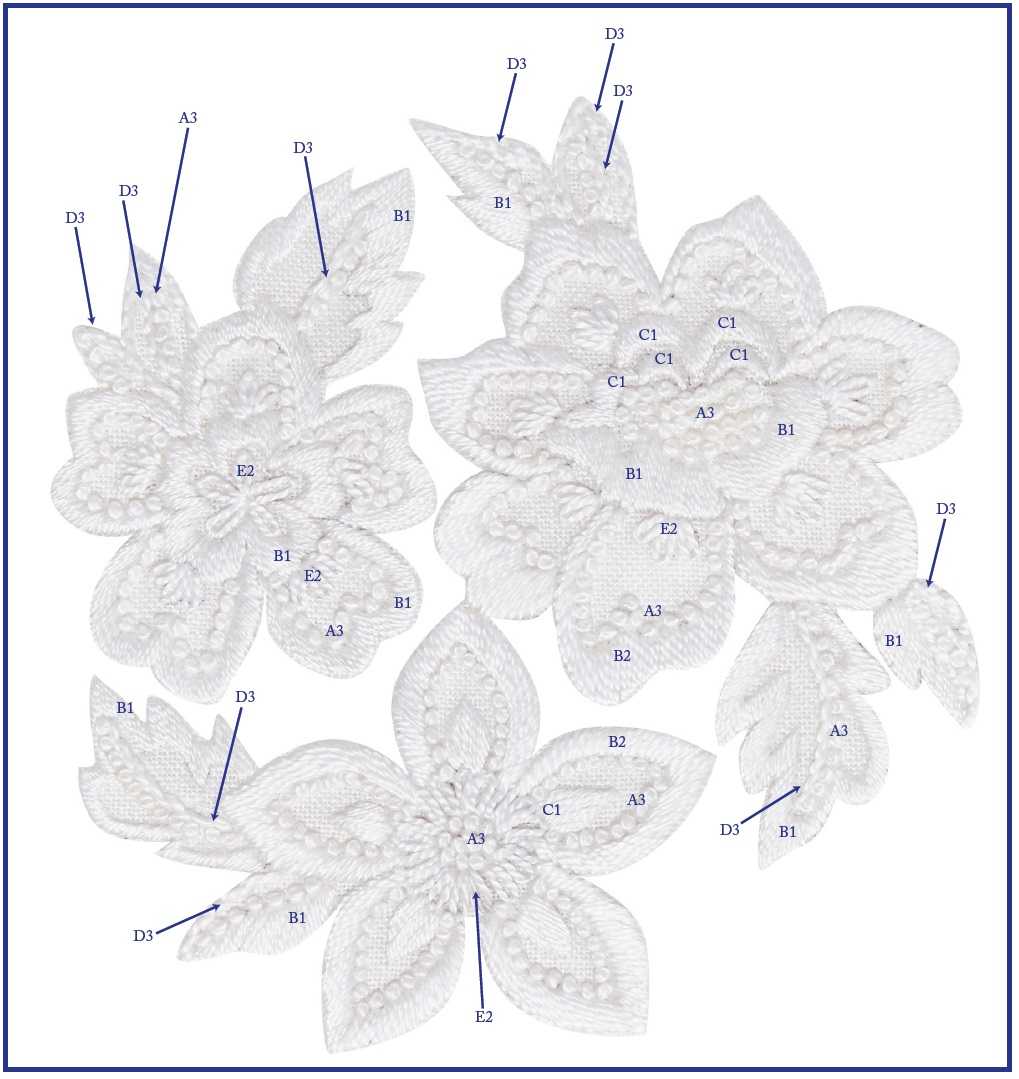
Three Peonies
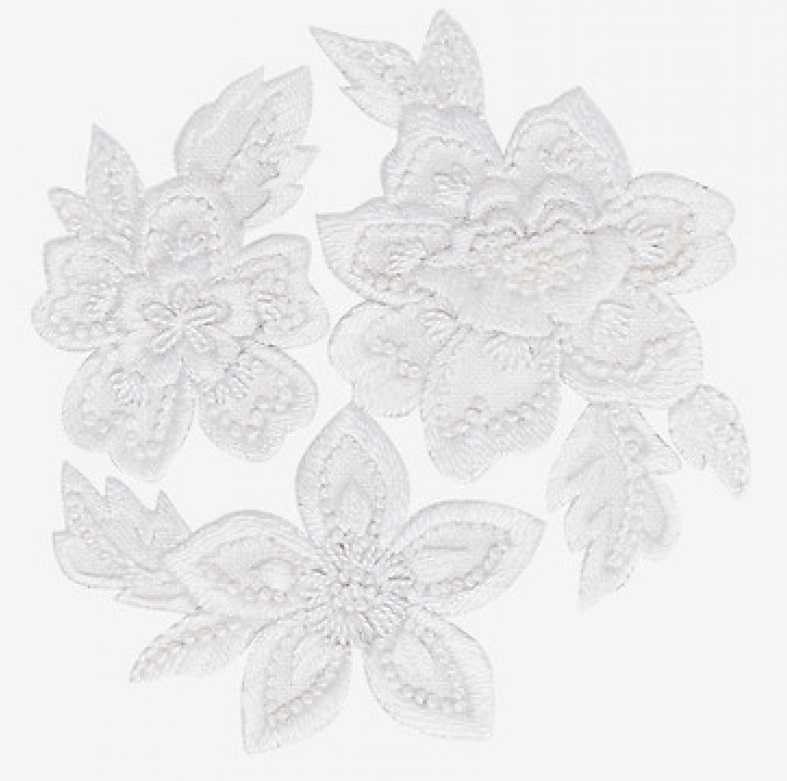
This flower arrangement can also be embroidered in white satin stitch.
You will need:
- a #12 embroidery needle
- embroidery fabric (white linen or cotton)
- DMC cotton perle floss, art. 115, sizes 3 and 5
- DMC cotton perle floss, art. 116, size 8
The thread amounts in the table are calculated for a finished motif measuring 15 by 16 cm.
The following stitches were used for this design: French knot, buttonhole stitch, stem stitch, padded satin (“puff”) stitch, and plain satin stitch. See the stitch instructions here.
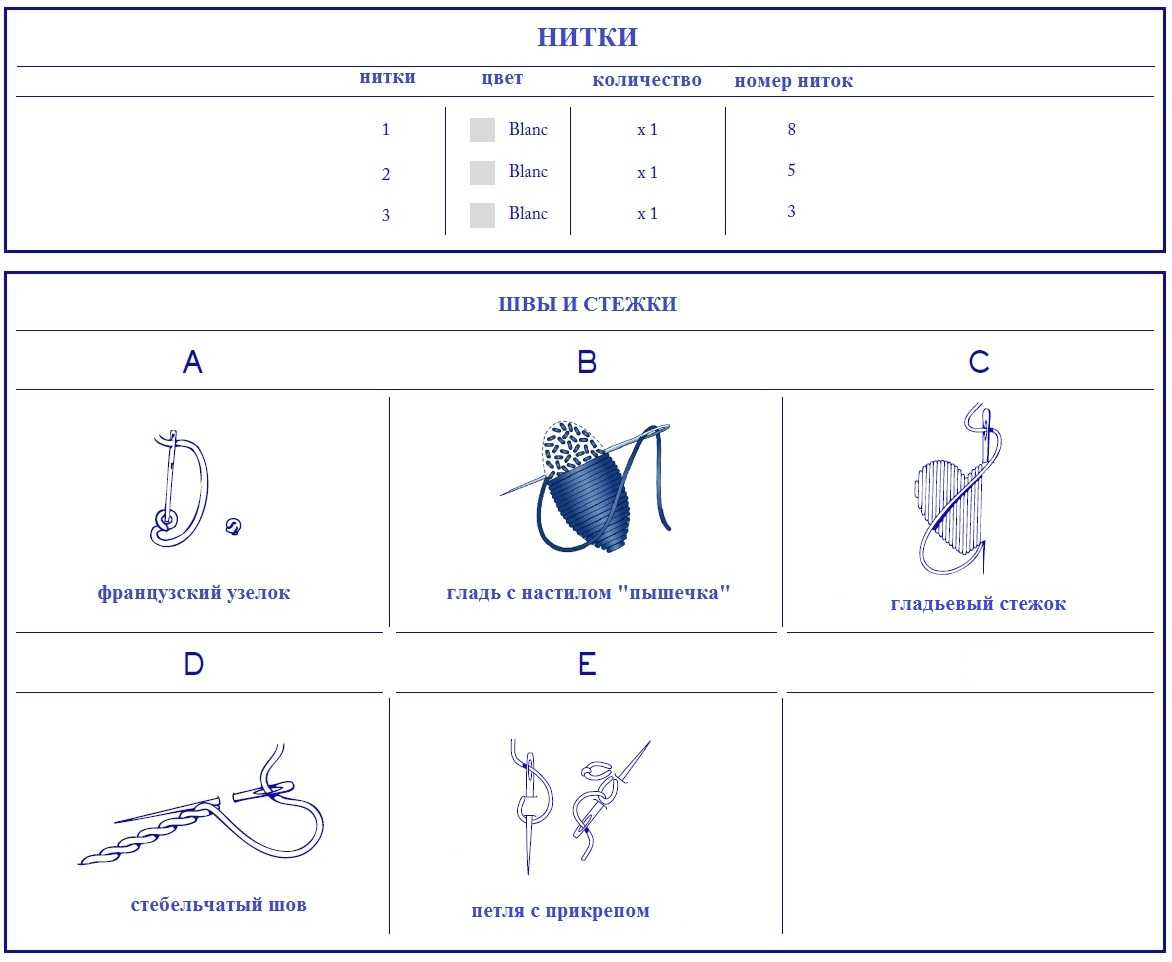
On the chart, numbers mark the thread color and size, and letters mark the stitch types. You can download the chart to make it easier to transfer onto fabric.
White Satin Stitch “Love”
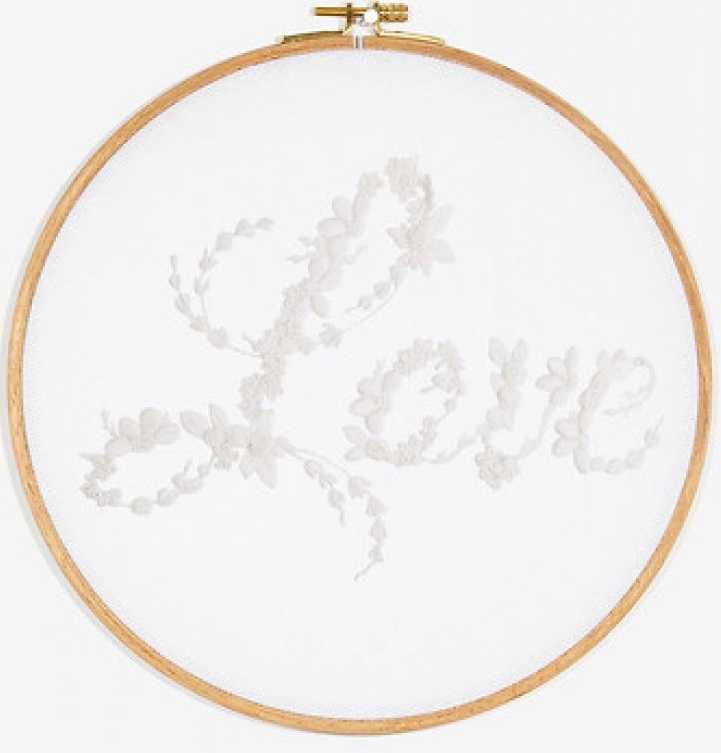
This white satin stitch design is perfect for Valentine’s Day, which many young people in Russia now celebrate, and it also works well for International Women’s Day on March 8.
This design combines satin stitch with elements of Brazilian embroidery.
You will need:
- an embroidery needle
- an embroidery hoop, scissors, and other tools
- embroidery fabric (linen is recommended)
- DMC cotton perle floss, medium #8, art. 115AR/8
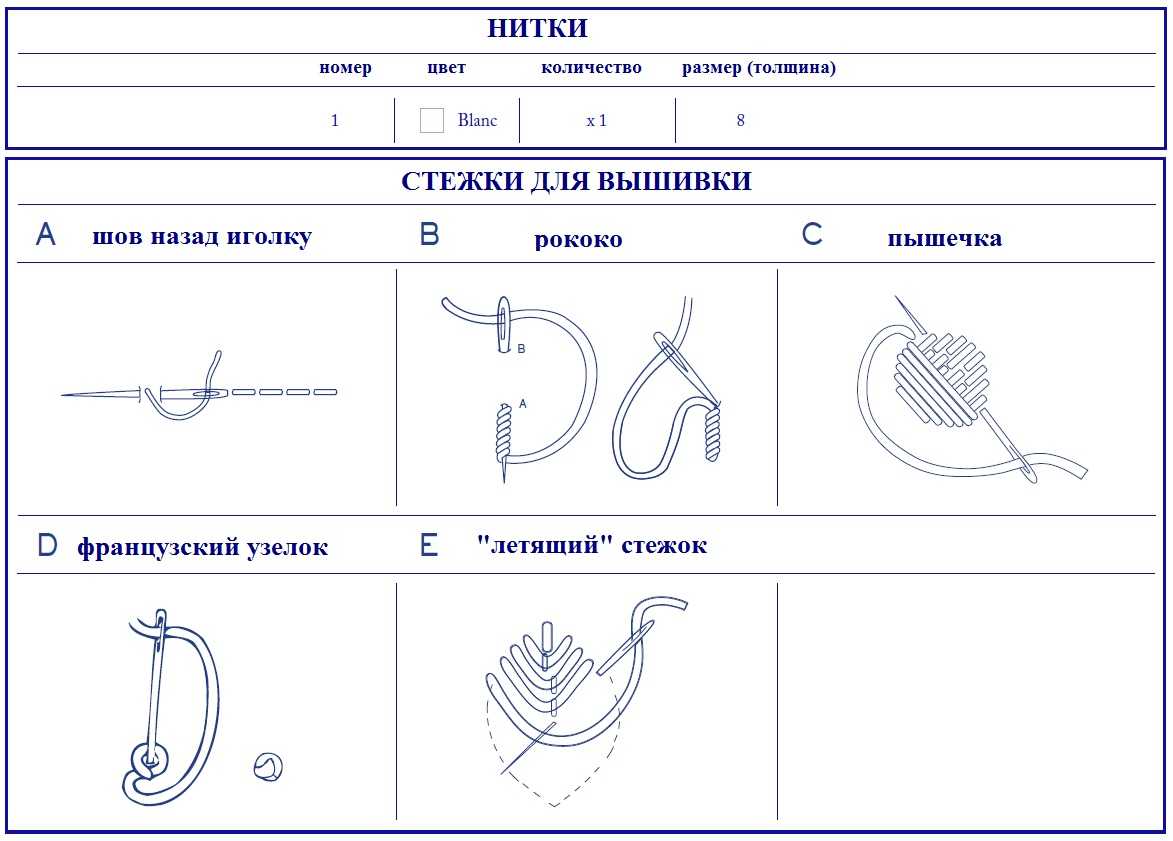
The following stitches were used to create this motif: French knot, backstitch, fly stitch, rococo stitch, and padded satin (“puff”) stitch.
On the chart, letters mark the stitch types, and the number marks the thread color (white).


Field Bluebells
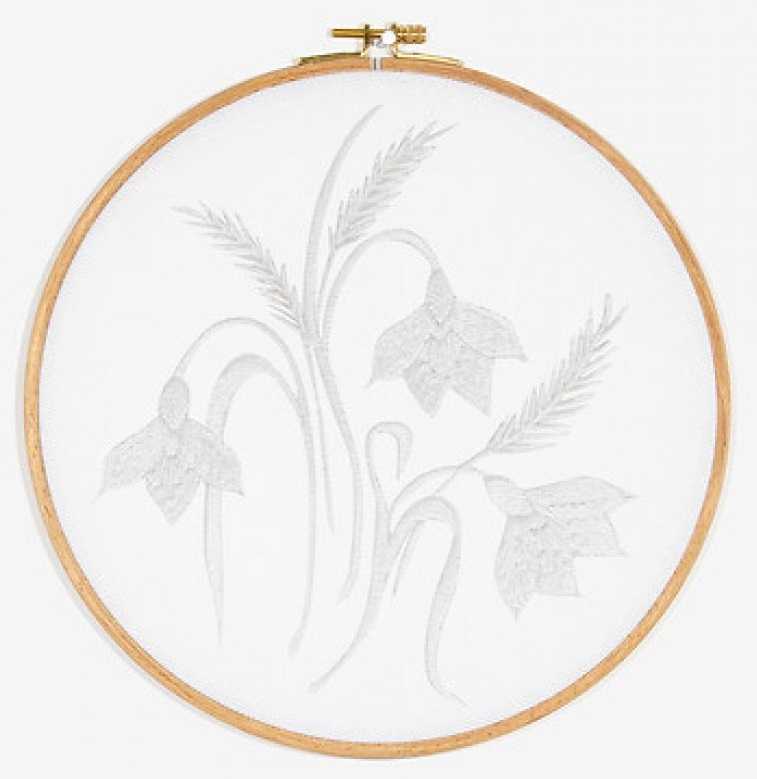
White satin stitch always looks delicate, even on wildflower motifs. Try this bluebells-and-wheat-ears design — it’s very easy to stitch and you’ll love it.
You will need:
- a #12 embroidery needle
- an embroidery hoop, scissors, and other tools
- embroidery fabric or evenweave (finished size approximately 14.2 by 16 cm)
- DMC cotton perle floss, art. 115, sizes 3 and 5
- DMC cotton perle floss, art. 116, size 8
How to embroider:
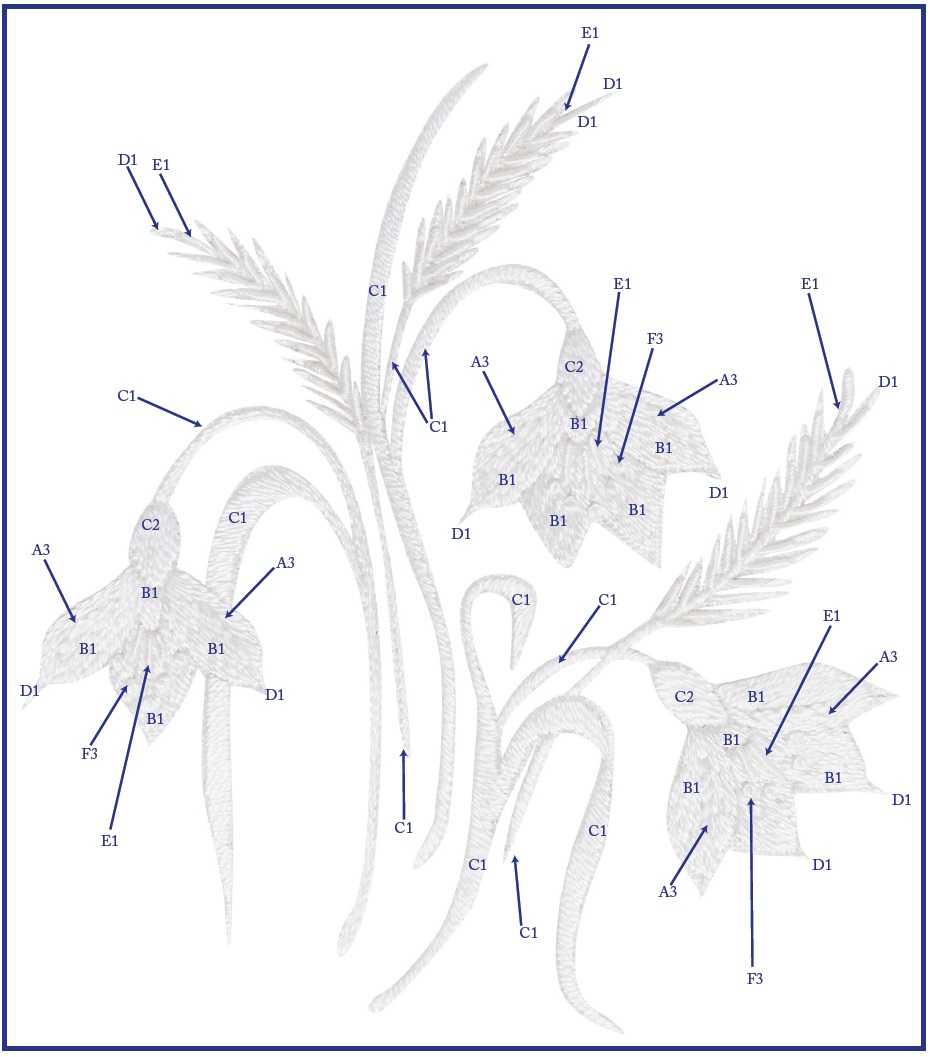
This motif uses very simple satin stitch techniques that are also used in white work: stem stitch, satin stitch, long and short stitch (thread painting), running stitch, rococo stitch, and French knot.
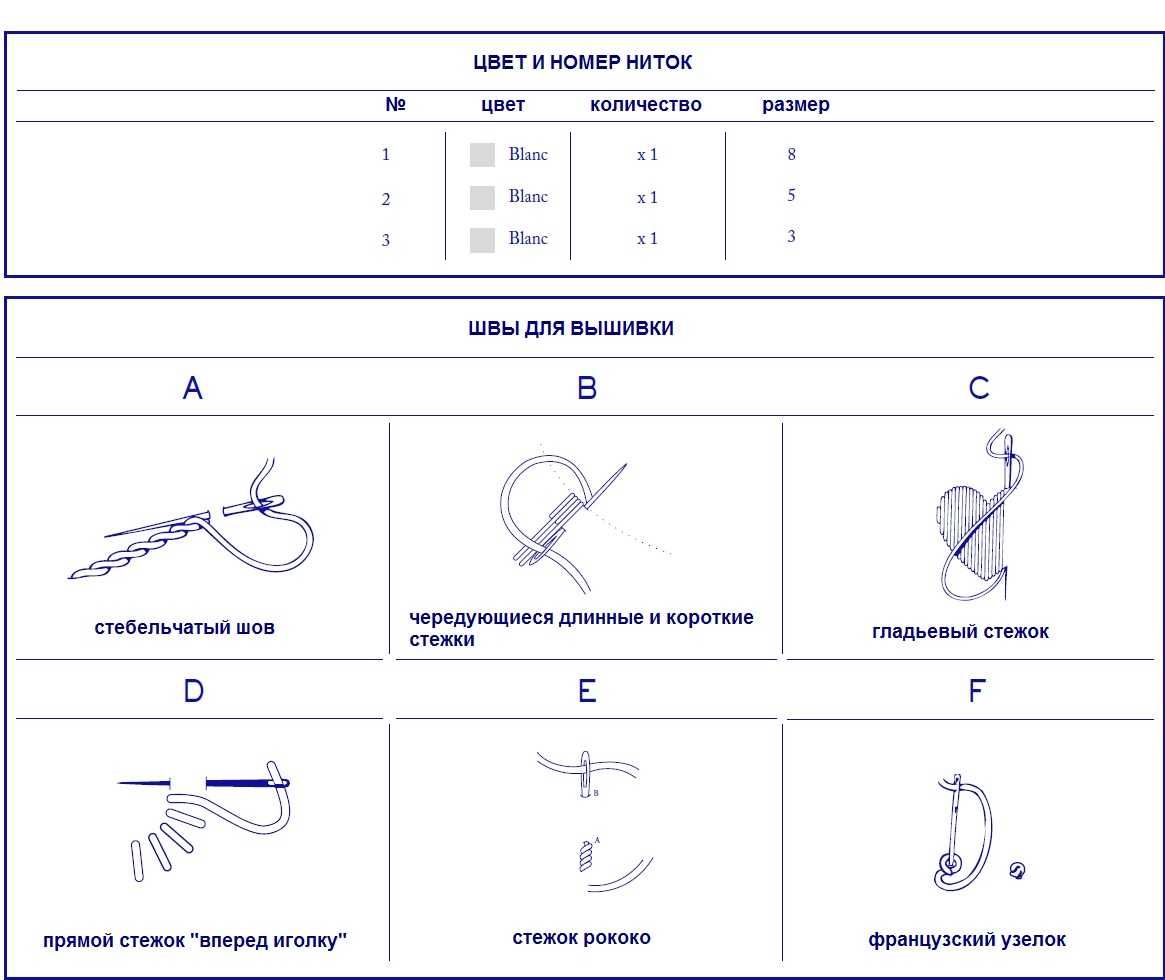
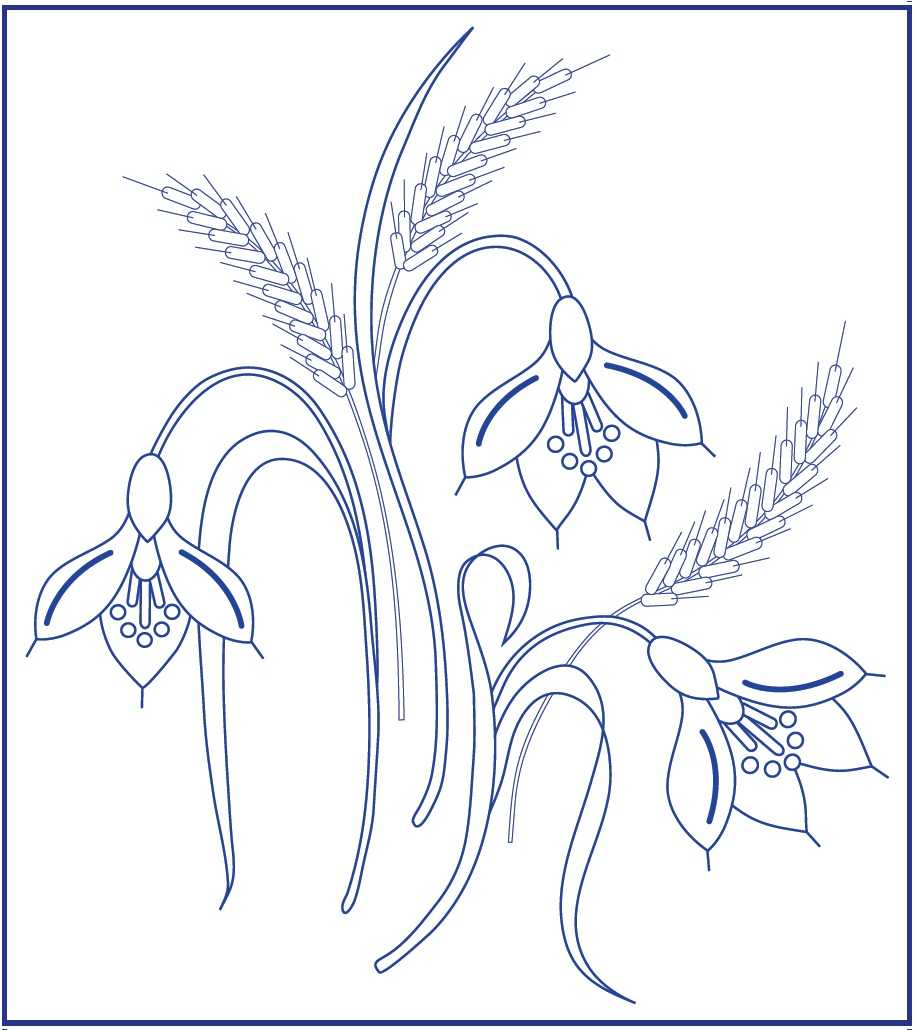
On the chart, letters mark the stitch types and numbers mark the thread type. Download the design and check the chart as you stitch so you don’t get confused. Good luck!
White Satin Stitch Wheat Ears
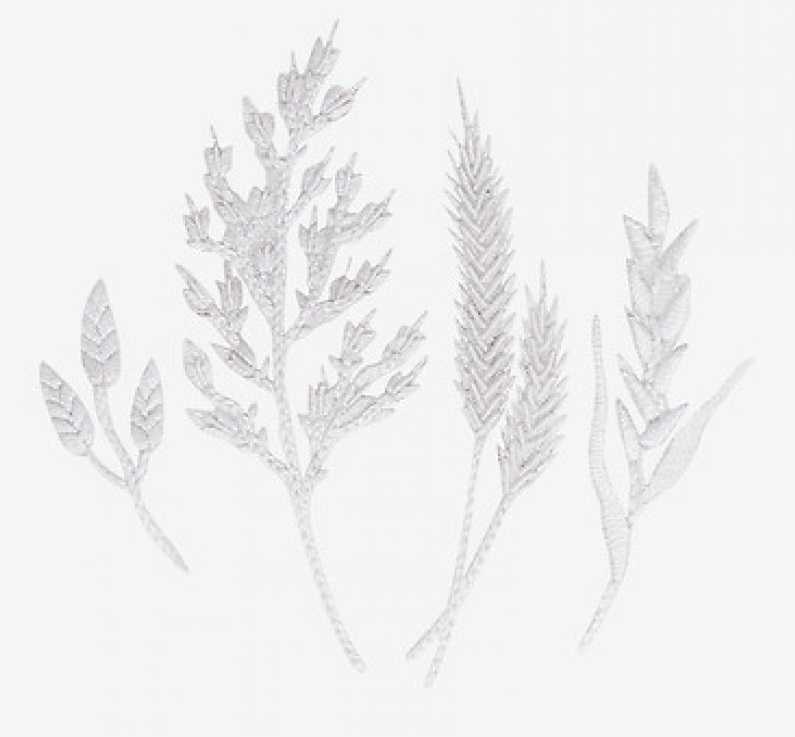
These lovely wheat ears will look wonderful on white denim clothing as well as on kitchen accessories.
You will need:
- a #12 embroidery needle
- an embroidery hoop, scissors, and other tools
- embroidery fabric or evenweave
- DMC cotton perle floss, art. 115, sizes 3 and 5
- DMC cotton perle floss, art. 116, size 8
How to embroider:
We use several satin stitch techniques here: stem stitch, padded satin (“puff”) stitch, chain stitch, satin stitch, running stitch, and rococo stitch. See the instructions for each stitch here.
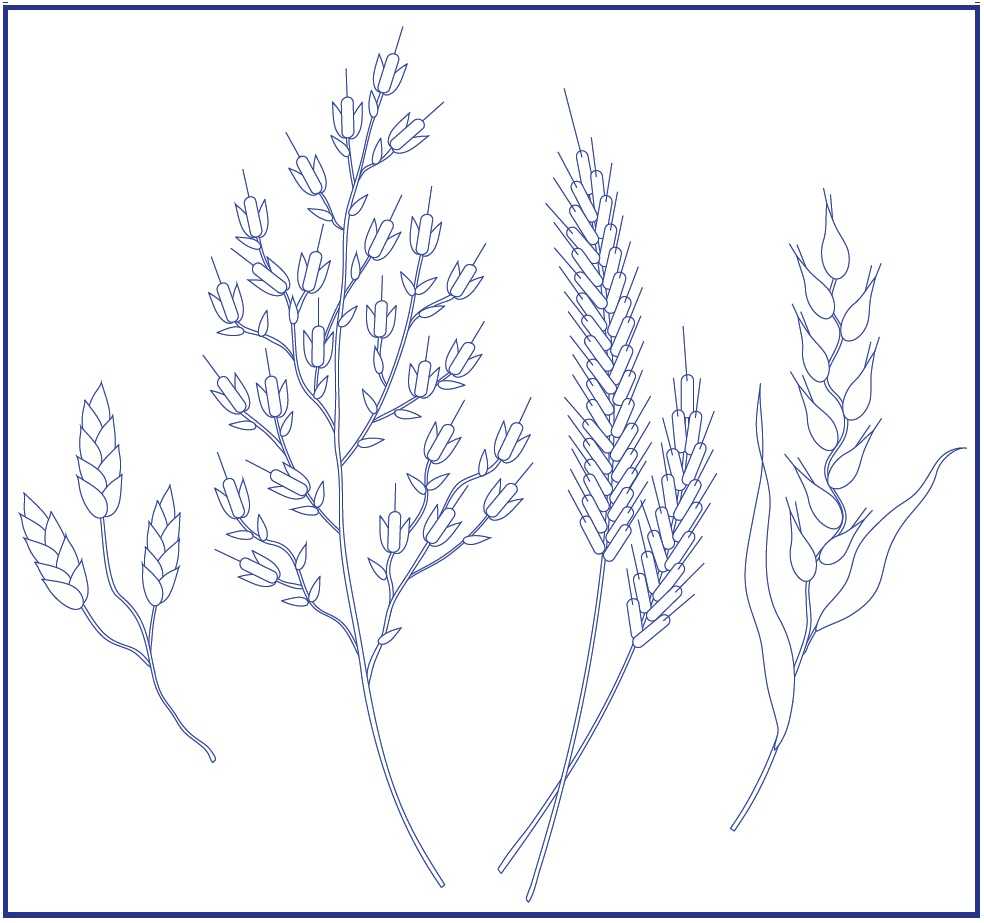
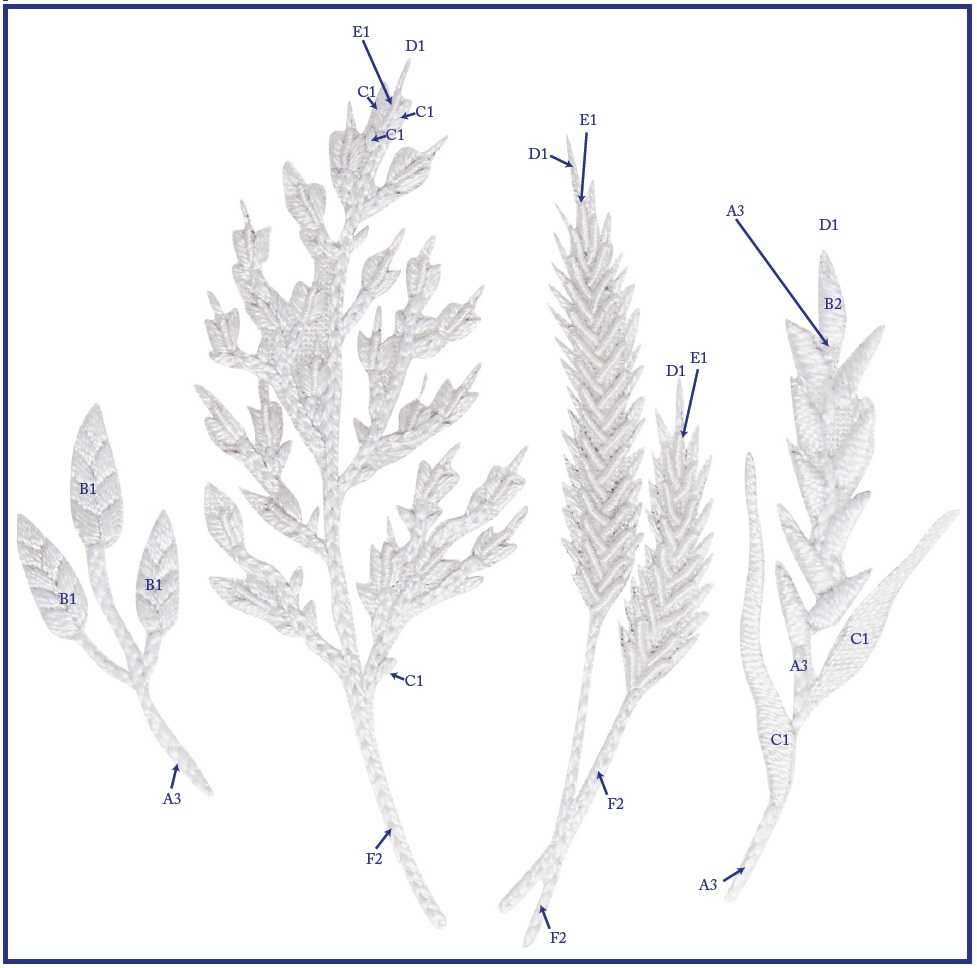
On the chart, letters mark the stitch types and numbers mark the thread thickness.
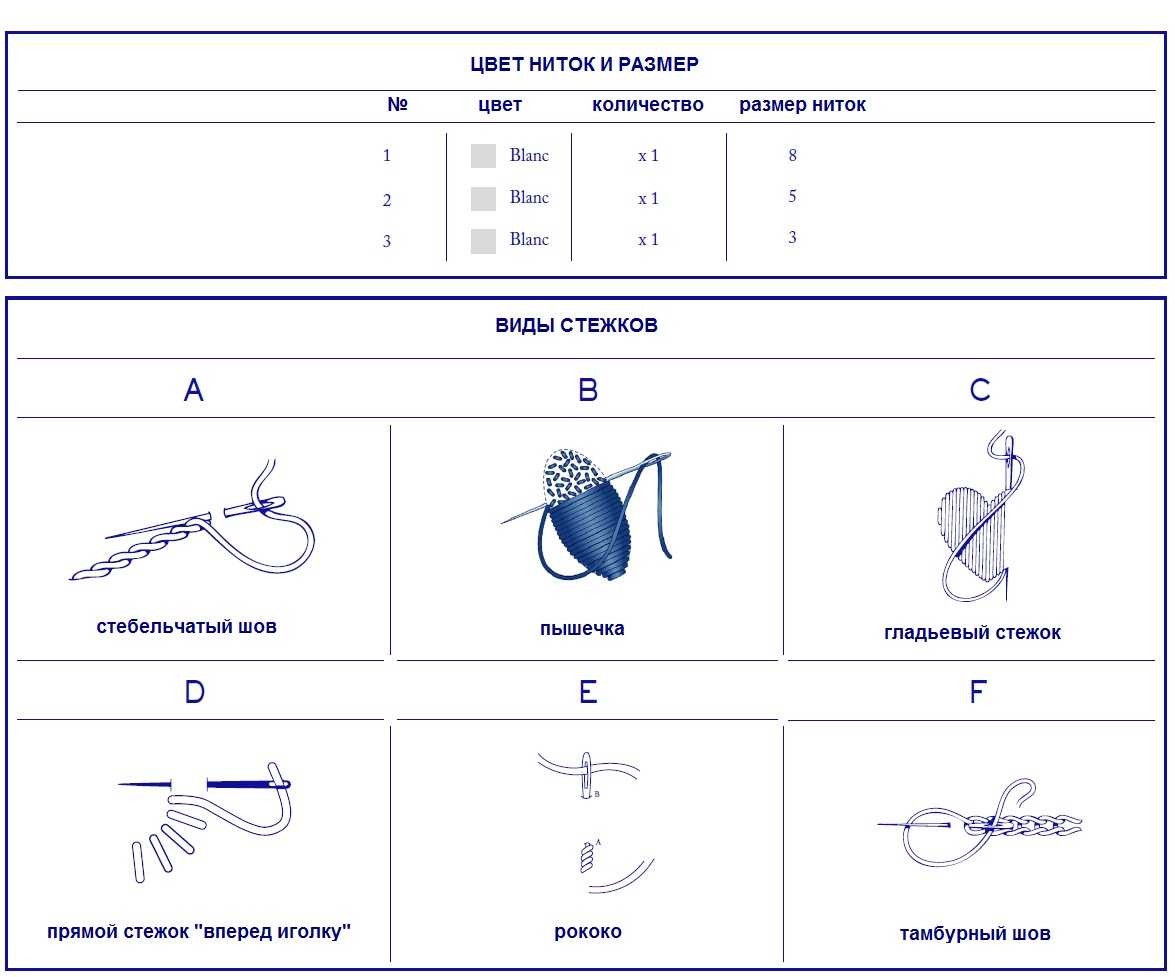
Check the chart from time to time as you stitch so you don’t get confused.
Floral Motif
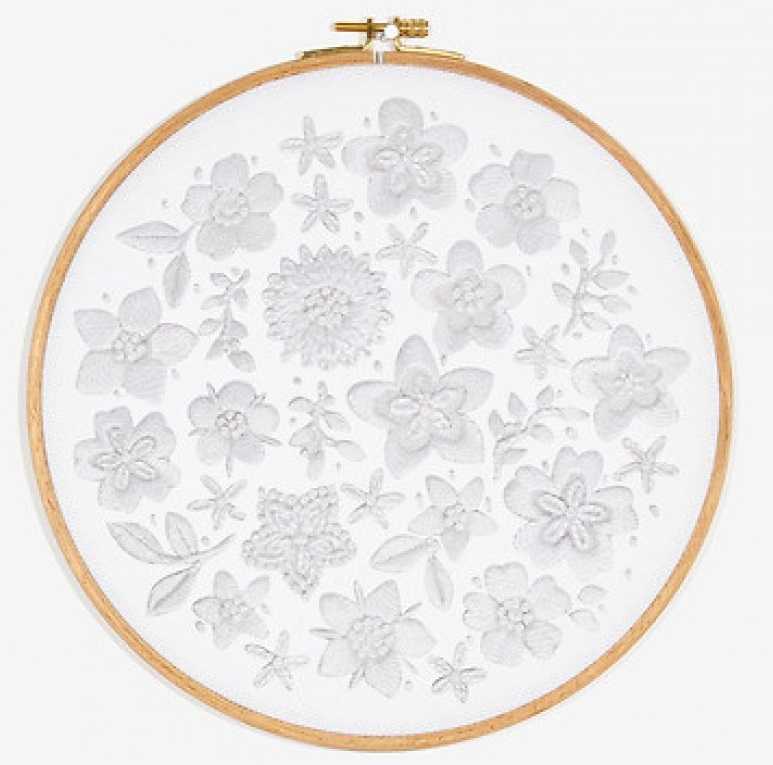
Here’s another flower design you can embroider in white satin stitch.
For this you will need:
- a #12 embroidery needle
- an embroidery hoop, scissors, and other tools
- embroidery fabric or evenweave
- DMC cotton perle floss, art. 115, sizes 3 and 5
- DMC cotton perle floss, art. 116, size 8
This white satin stitch design isn’t difficult to work; here we also use the padded satin (“puff”) stitch, French knot, buttonhole stitch, stem stitch, and rococo stitch.
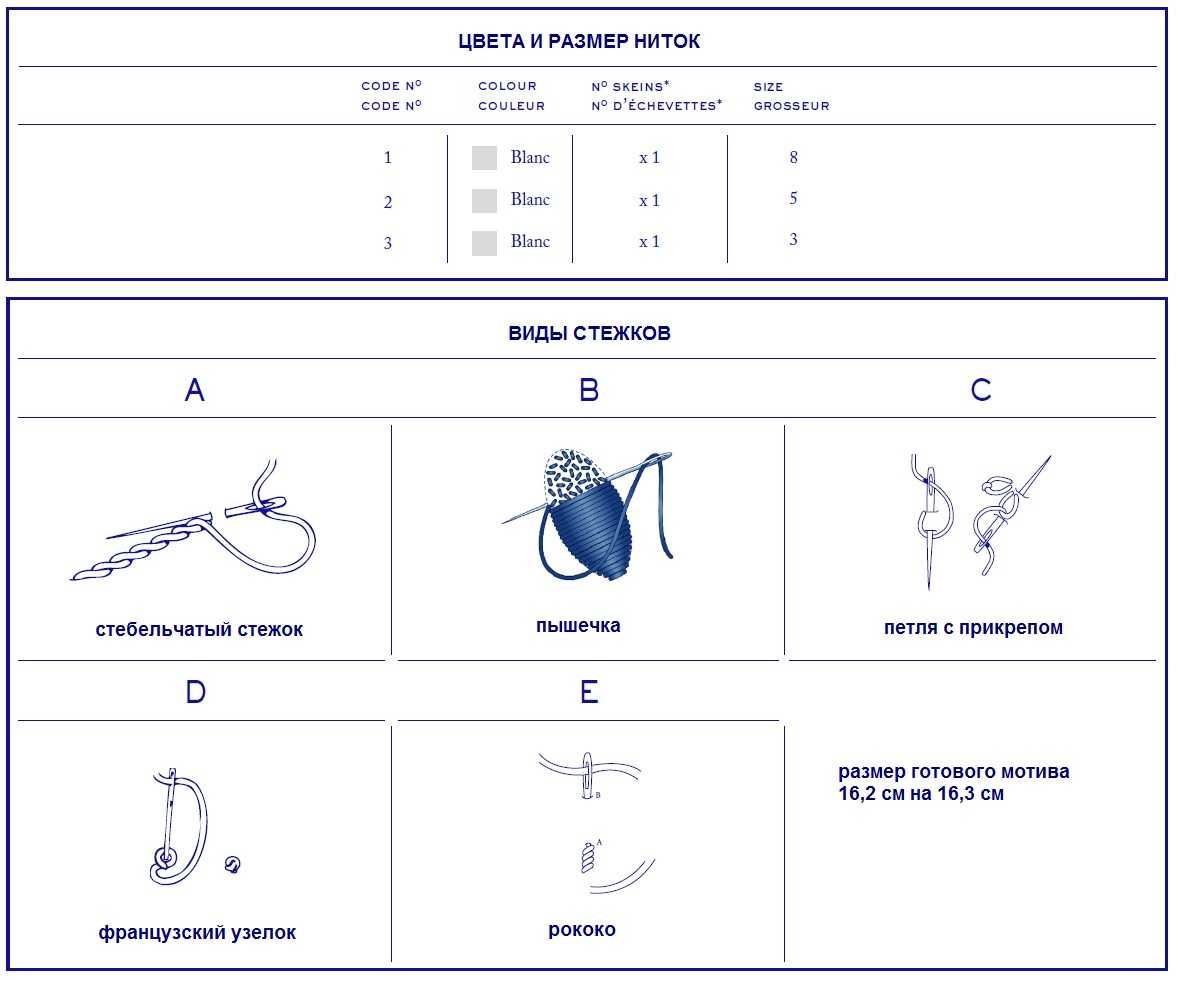
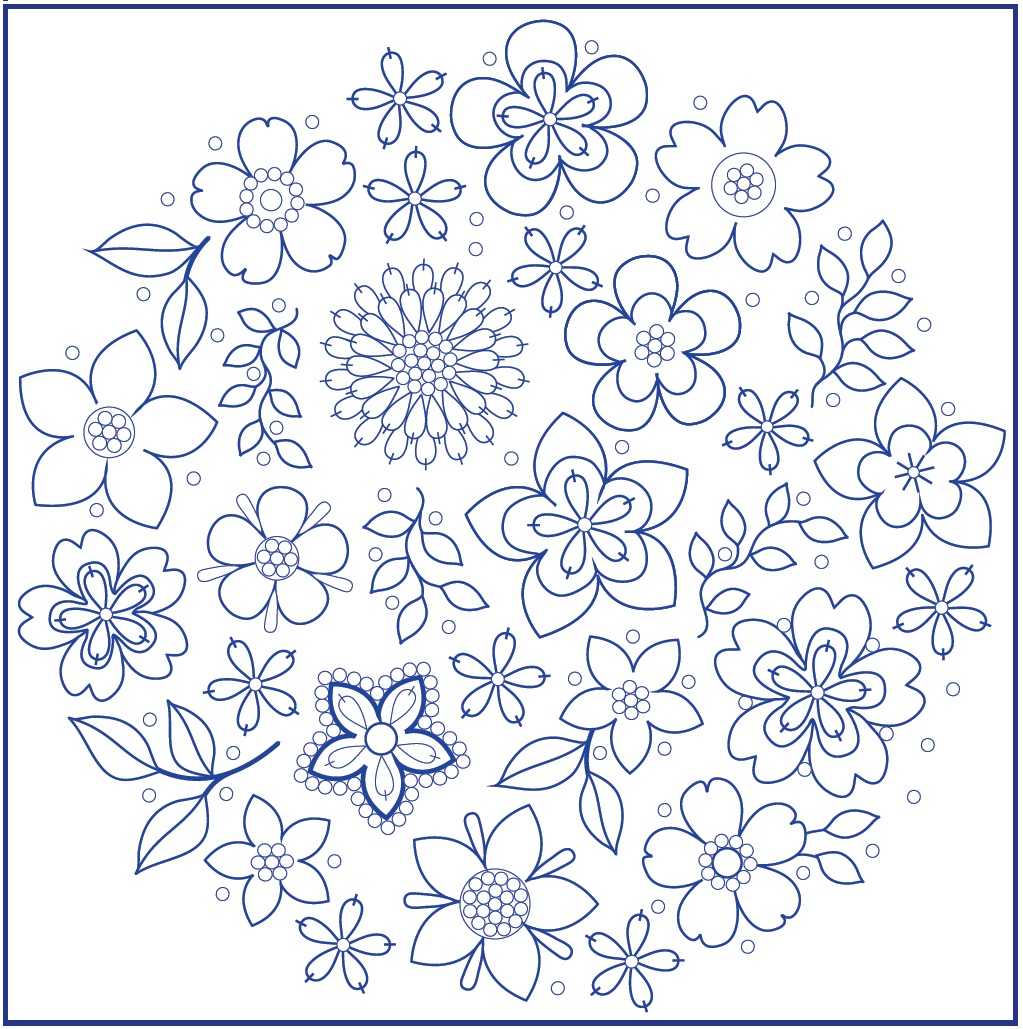
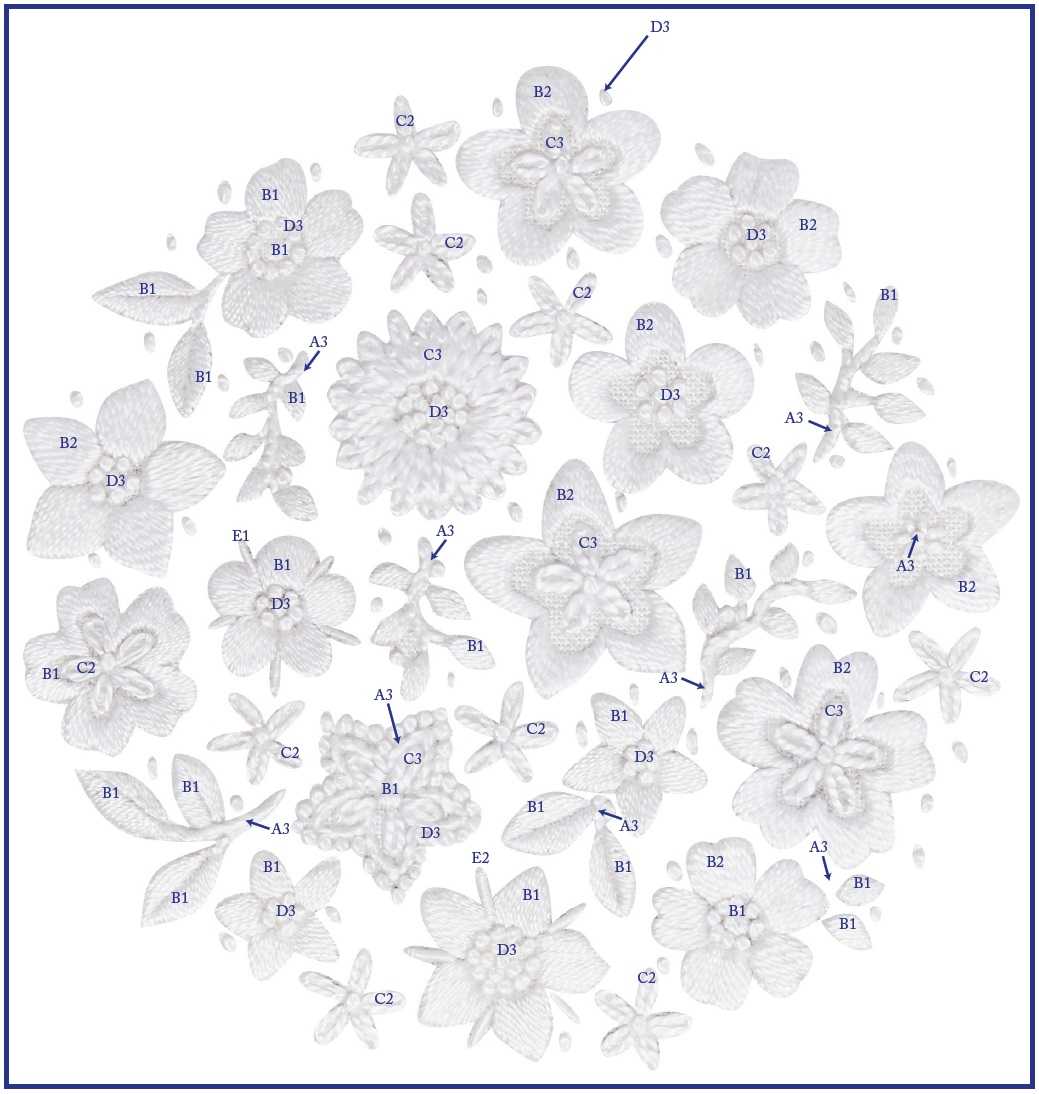
For your convenience we’re also including the outline template you can download and transfer to fabric, along with the stitch chart for this white satin stitch flower design, where letters mark the stitch types and numbers mark the thread size.
Wildflowers
Continuing with wildflower themes, here’s another white satin stitch chart.
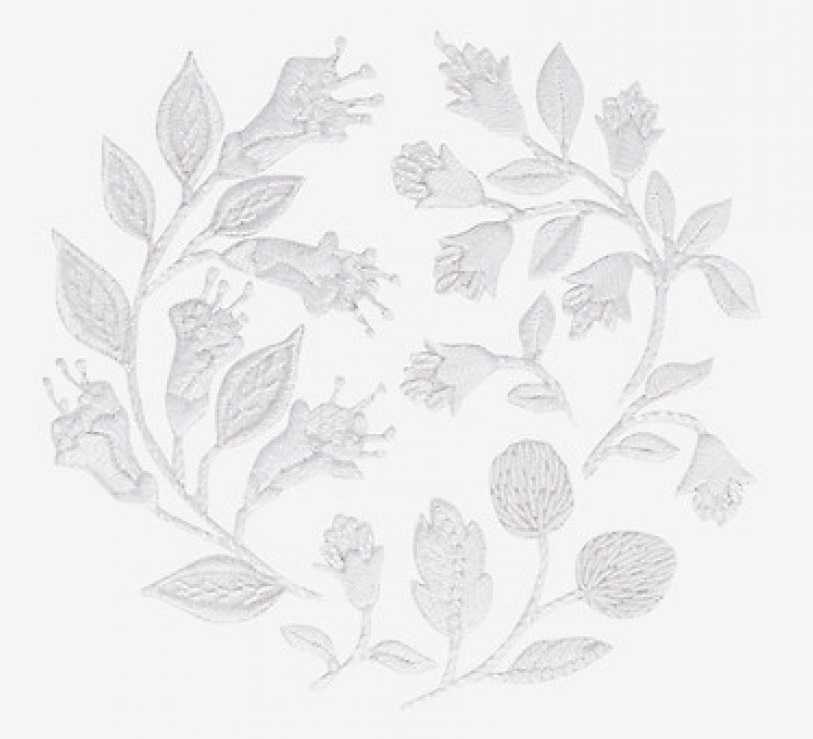
This motif measures 16 by 15 cm, and the thread amounts are calculated accordingly. The stitches used here include French knot, rococo stitch, padded satin (“puff”) stitch, fly stitch (sometimes called “herringbone” or “fir tree” stitch), buttonhole stitch, plain satin stitch, and long and short stitch.
You will need the same materials as in the previous designs:
- a #12 embroidery needle
- an embroidery hoop, scissors, and other tools
- embroidery fabric or evenweave
- DMC cotton perle floss, art. 115, sizes 3 and 5
- DMC cotton perle floss, art. 116, size 8
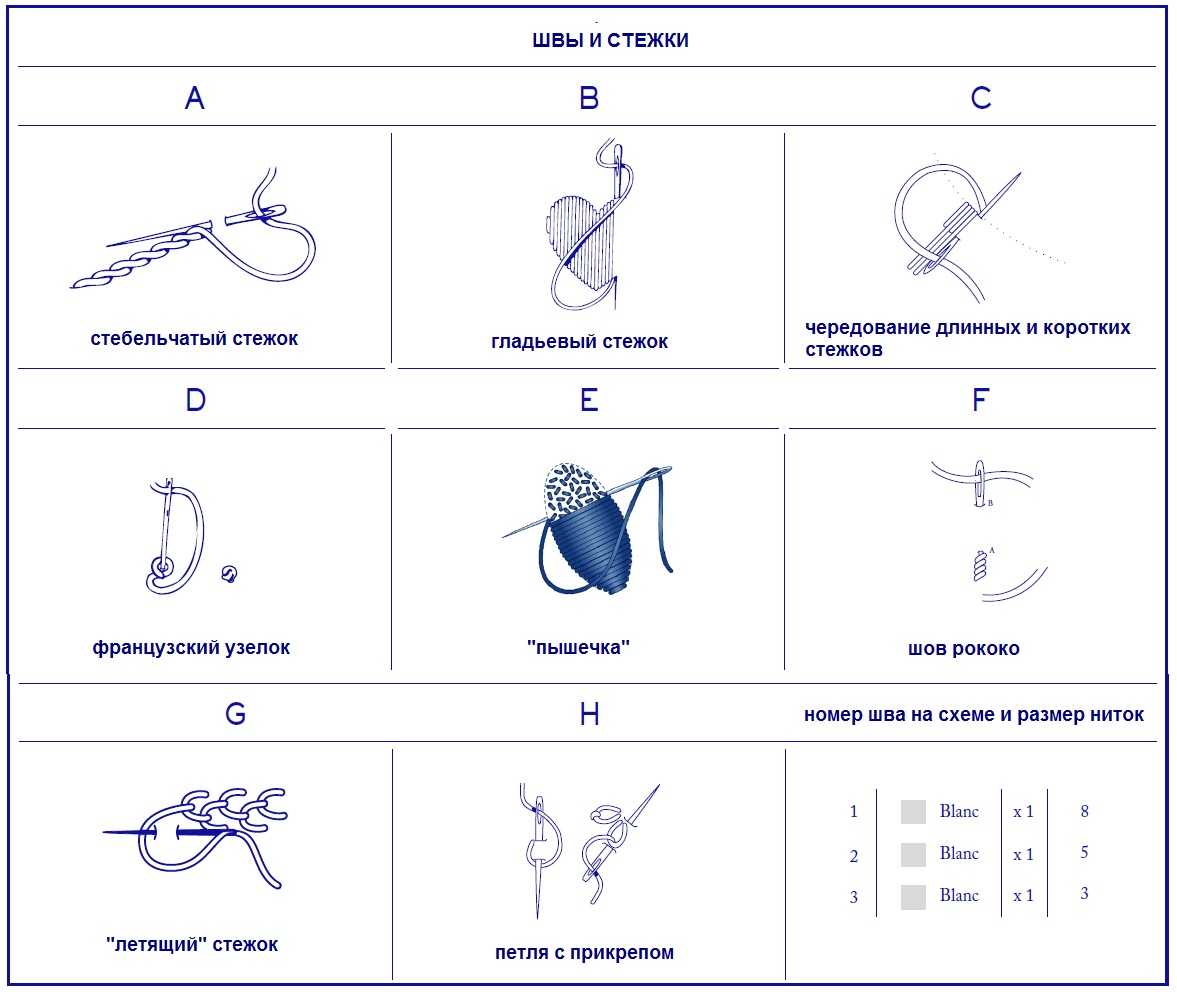
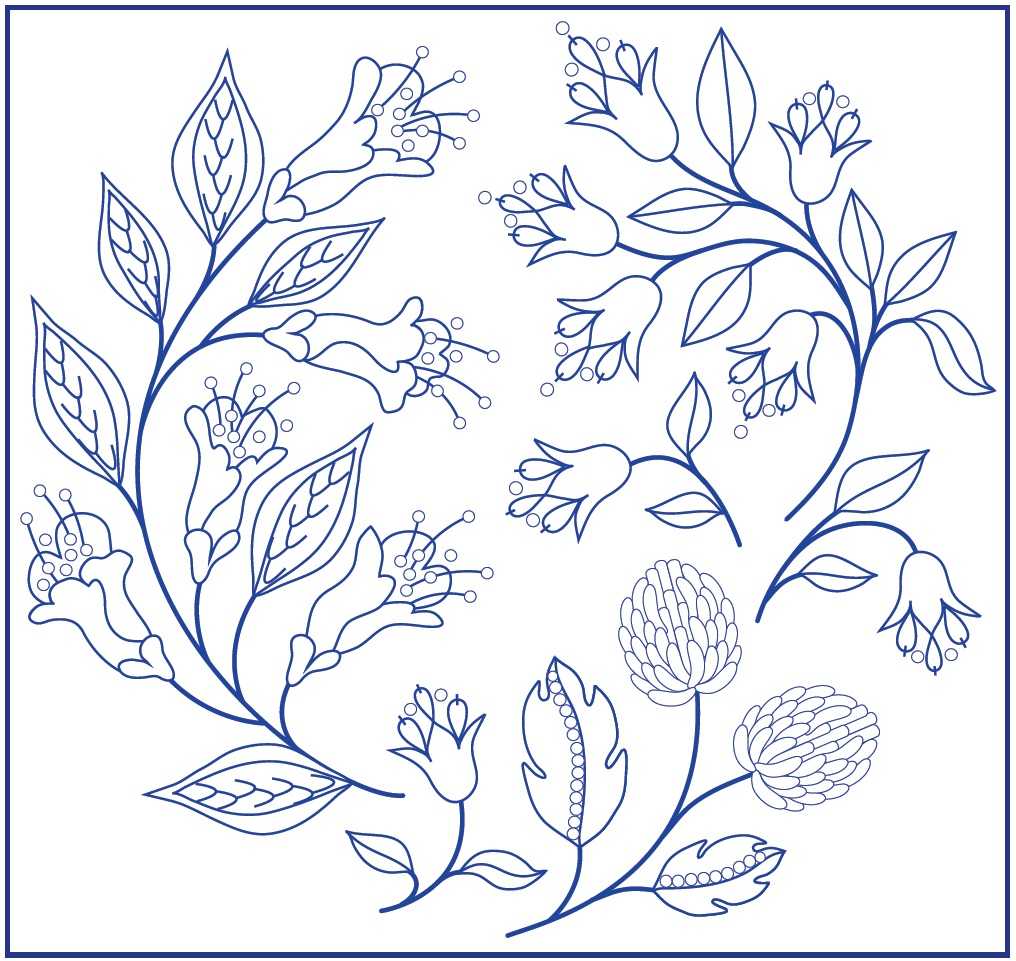
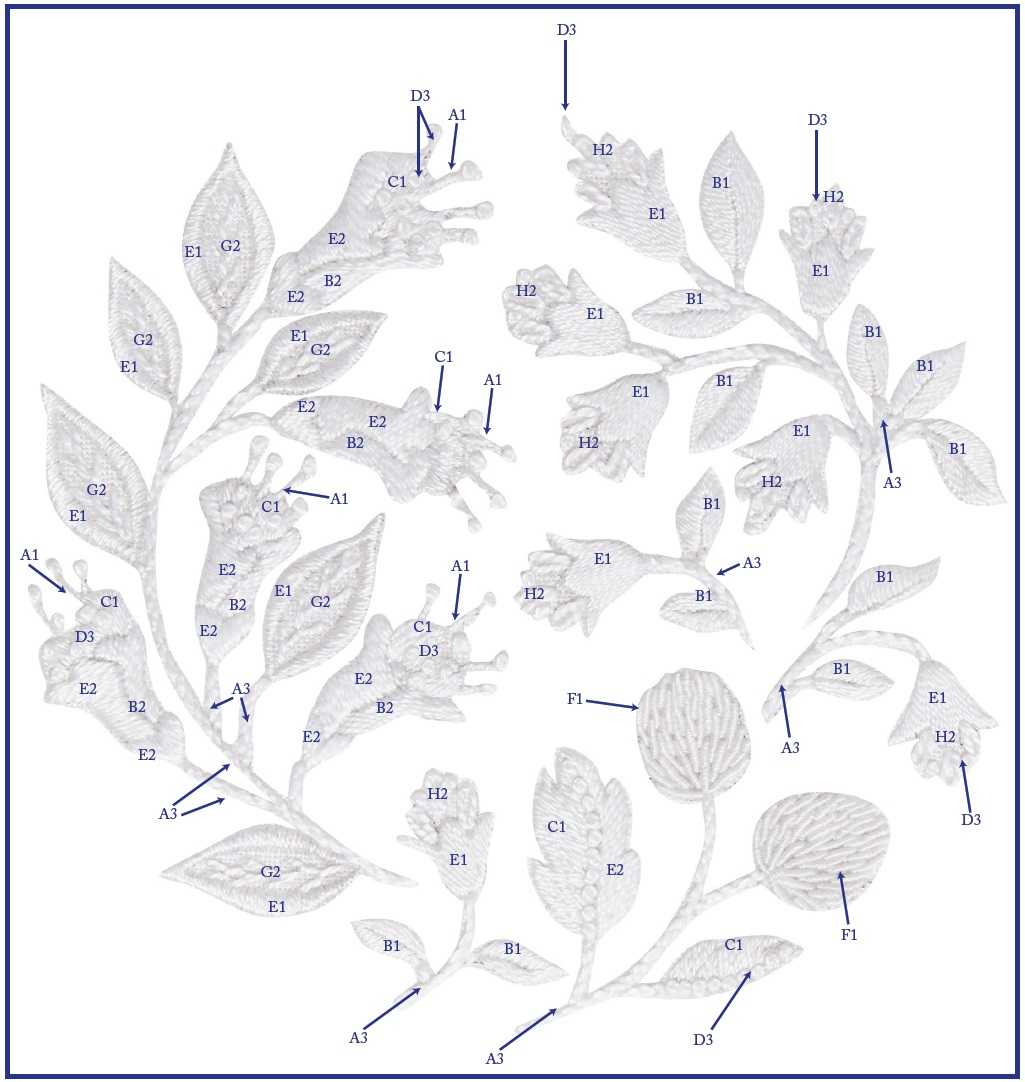
On the chart, numbers mark the thread types and letters mark the stitch types. You can download both the outline template and the chart.
May your stitching bring you joy!