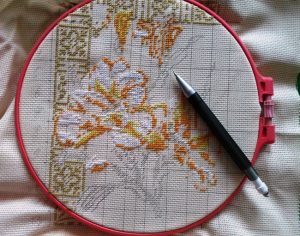
The foundation for cross stitching is typically Aida cloth or evenweave fabric. The choice of which to use depends entirely on the crafter’s preference. Both represent a woven fabric with a clear grid-like structure.

These fabrics are widely used for cross stitching, petit point, and beadwork. Manufacturers produce canvas in two main varieties: cotton and linen. Among modern stitchers, working with plastic canvas, water-soluble stabilizer, or perforated paper is also gaining popularity.
Classic Material. Cotton fabrics are highly popular, while linen variants are used slightly less often. Cotton options are budget-friendly. Their distinctive feature is a relatively low cost and a vast selection of different variations. Stiffness and thread count (size) are the two fundamental parameters to consider.
Popular Fabric Brands and Types
Most standard cross stitch canvases are made from natural cotton. The woven threads are often treated to increase stiffness. The fabric consists of threads grouped together, running vertically and horizontally, woven using a special technique.
This creates distinct squares bounded by clear holes at the corners, making it easy to place cross stitches perfectly.
Manufacturers also offer variations with the addition of metallic threads (Lurex). These give the finished piece a unique, subtle shimmer. Such canvas is ideal for styling New Year and Christmas designs.
Aida Fabric Varieties
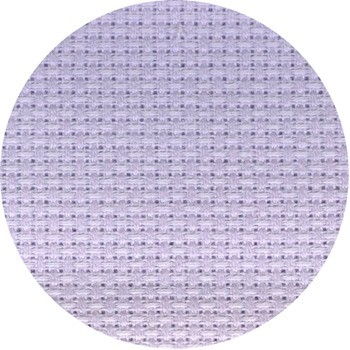 In cross stitching, it is customary to classify fabric by the number of squares (or stitches) that fit into one inch. This parameter is called the “count.” As the count number increases, the size of each square becomes smaller.
Aida sizes can be divided into the following subgroups:
- Large squares are found on Aida 8. It is perfectly suited for beginners and teaching purposes.
- Fabrics up to count 14 are considered large.
- Crafters worldwide often choose Aida 16 for stitching with two strands of floss, and Aida 18 for single-strand stitching. The resulting image is of high quality, detailed, and realistic.
- Aida 22 has a very small square size. The finished pattern looks solid and tapestry-like. Working on it is meticulous and time-consuming.
Available Canvas Colors
Store shelves boast a wide variety of fabric colors. Choosing a colored canvas becomes especially relevant if the design does not require full-coverage stitching. Projects stitched on a vintage-style background look vibrant and artistic. Pastel-shaded canvas gives the finished piece a unique, delicate design.
There are also fabrics with pre-printed pastel backgrounds or motifs. They are used to fill the background effortlessly. Such subtle prints do not distract from the main stitched pattern; in some cases, they even enhance the overall effect.
For convenience during the stitching process, you can find pre-gridded canvas. The standard grid size is 10×10 cross stitches, which corresponds to most pattern charts.
Overview and Comparison of Manufacturers
The most popular and high-quality fabric is produced by the German company Zweigart. However, cheaper alternatives are available, often manufactured under license in countries like Hungary.
Aida canvas produced in Belarus is also quite common and doesn’t lag behind in quality, though it often features untreated edges and can be somewhat softer. Therefore, using an embroidery hoop or frame is absolutely necessary to achieve a neat result.
Russian-made Aida also shows good quality standards, and many needleworkers leave positive reviews about using it in their creative projects.
Evenweave as a Cross Stitch Foundation
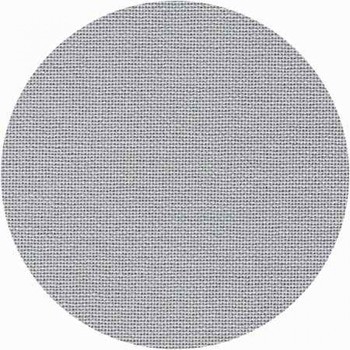 Evenweave fabric implies the absence of clearly defined squares. By nature, it is a continuous, evenly woven cloth. Stitching on evenweave requires a bit more experience, as you have to constantly count the fabric threads.
This foundation can be used for almost any project, freeing you from a rigid square grid.
Designs with partial coverage look much better on evenweave because there are no visible square holes in the unstitched background. This fabric is also frequently used for surface embroidery. It is produced from linen, cotton, or synthetic and silk blends, making it highly durable. German manufacturers are widely considered the best in the evenweave market.
The most sought-after types include:
- Bellana – The addition of artificial silk (viscose) makes this fabric very soft. The special weaving technique helps the needle pass through easily. It is excellent for stitching on napkins, tablecloths, clothing, and creating tapestries.
- Hardanger – A fine-weave cotton fabric. It features 87 threads per 10 centimeters (22 count), making it perfect for detailed and delicate work.
- Lugana – A wonderful choice for stitching pillows and tablecloths. It is very soft to the touch due to the inclusion of artificial silk in its composition.
- Linda – Made of 100% pure cotton. When stitching over two threads, it corresponds to the size of 14-count Aida. It is lightweight and allows for easy creation of fractional stitches both horizontally and vertically.
VIDEO: Evenweave, Linen, Aida: My Cross Stitch Experience