The history of soap making spans several thousand years, originating in Ancient Egypt and Mesopotamia. The oldest manuscripts describing the process date back to around 2200 BC. At that time, animal and vegetable fats were used as components, alongside the addition of lead and sodium. Commercial factory production began in the 1930s in Europe and the USA. Today, it is incredibly easy to organize a mini-production right in your own kitchen by purchasing the necessary ingredients from specialty craft stores.
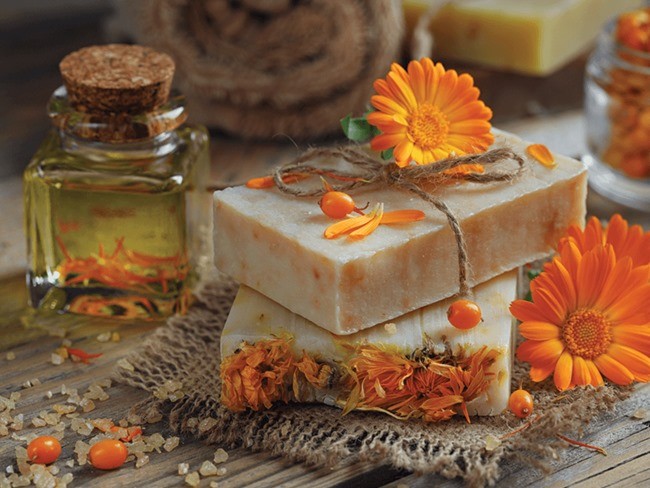
We have compiled the best free online masterclasses and video tutorials on DIY soap making at home.
Where to Start with Soap Making?
You will need a minimal set of supplies: a clear soap base, a silicone mold, a heat-safe melting cup, colorants, fragrance oils, and a moisturizing carrier oil. Melting is typically done in a microwave (using a water bath is also a great alternative). It is better to start with small batches just in case your first attempt isn’t perfect. In this masterclass, beginners will learn the differences between various soap bases, what causes common defects, and the advantages of using silicone molds over plastic ones.
Basics of Soap Making
The basic manufacturing sequence:
- The soap base is cut into cubes and placed in the microwave for a few minutes to melt.
- Cosmetic colorants, fragrances, and rubbing alcohol (to prevent bubbles) are added.
- The liquid mass is poured into a plastic or silicone mold to set and harden.
- The finished bar is removed from the mold and can be wrapped as a gift or used immediately.
12 Creative Ideas for Soap Making
Juicy lemon slices with excellent lather, a cup of frothy coffee, realistic cheese blocks, appetizing sushi rolls with greens – everyone will find an option to their liking. By making a replica of an Oreo cookie or a stick of chewing gum and wrapping it in real candy foil, you can even pull a fun prank on a friend. Using an empty pill blister pack as a mold allows you to create a “travel” version – it’s convenient to take on trips or carry in your purse, popping out a single “pill” when needed to wash your hands. If you want larger uniform pieces, you can use a watercolor paint palette and apply various coloring pigments.
Making New Soap from Old Scraps
A great method for thrifty crafters. For this project, take several leftover soap remnants that are usually thrown away, grate them finely, pour boiling water over them, and stir until a thick, uniform consistency is achieved. Then, place the mixture into a mold (the blogger uses a simple soap dish lid). The result is a unique assorted bar, where the final color depends entirely on your scrap materials.
Watermelon Slice Soap
To make a bright, juicy watermelon slice look realistic, you need to create a two-layer rind (a green outer part and a white inner layer). The seeds are made from a mixture heavily colored with black pigment. The final step involves filling a triangular silicone mold with a red soap mixture infused with a sweet watermelon fragrance. The result is a colorful, summery triangular slice.
Amber Stone Soap
The uniqueness of this technique lies in creating a one-of-a-kind product: making two identical stones is literally impossible. The workflow algorithm:
- Coloring the base, mixing, and pouring the components;
- Shaping the raw stones from a square block;
- Trimming corners and edges with a vegetable knife (excess is removed in thin shavings);
- Polishing the amber stones with a water-dampened sponge for a realistic shine;
- Properly drying the finished product.
The remaining shaved scraps can be placed into molds and poured over using the same technology – resulting in yet another interesting and eco-friendly design.
Soap Swirls Technique
Swirls represent a technique of creating transitioning patterns and marbles that flow beautifully from one color into another. There are several ways to form swirls using two or more colors (for example, dragging a glass rod or skewer through the poured soap). This technique is perfect for those who have already mastered basic skills and have a few different dyes on hand. The results are original, vibrant bars that are absolutely perfect as gifts. The main advantage is the complete uniqueness of every pattern.
Rose Soap
Clear soap with a delicate rose embedded inside looks incredibly gorgeous and luxurious. You can create this soap for any skin type with various added effects (nourishing, anti-aging, or softening). The key is to understand the healing and cosmetic properties of different essential and carrier oils. By using different combinations of natural additives, you can easily formulate your own custom skincare recipes.
Soap with Oatmeal and Cream
Natural ingredients have a profound positive impact on skin condition, giving your face and body a healthy glow. A beautiful, highly beneficial soap is made by adding ground oatmeal, dry milk or cream powder, wheat germ oil, and a few drops of vitamin E solution. The batch is formed into a block and, after drying, is sliced into bars of the desired thickness. All that’s left is to wrap it according to the occasion, making a wonderful homemade gift for friends and loved ones.
DIY Household Cleaning Soap
https://youtube.com/watch?v=IvXkxwQ60oo
An old, reliable recipe widely used during the Soviet era. The base is standard laundry soap (72%), which is grated and mixed with mustard powder, ammonia, and baking soda. The components are combined, covered with hot water, and whipped together using a hand blender. The result is a thick, powerful cleaning paste capable of tackling almost any tough stain or grease in the house.
Homemade soap making provides a wonderful opportunity to create original, personalized gifts while maintaining full control over the ingredients, allowing you to choose natural, beneficial additives completely free of harsh, unnecessary chemicals.

Отличная и познавательная статья для начинающих мыловаров! Действительно, процесс создания мыла с нуля — это увлекательное творчество, а результат всегда радует натуральностью и уникальностью.
Спасибо автору за подробные рецепты и ценные советы по ошибкам новичков. Особенно актуально напоминание про срок годности и хранение, так как натуральные компоненты требуют бережного отношения. Удачи всем в ваших мыльных экспериментах!