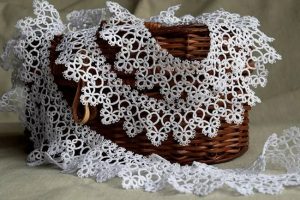
Macrame is a knotting technique, translated from Arabic meaning “fringe” or “lace”. Woven items are used to decorate home interiors (plant hangers, wall panels, napkins, rugs, coasters, and curtains) as well as wardrobes (bags and belts, shawls and scarves, necklaces, and clutches). Nowadays, with the handmade movement at the peak of its popularity, macrame has become a highly fashionable hobby.
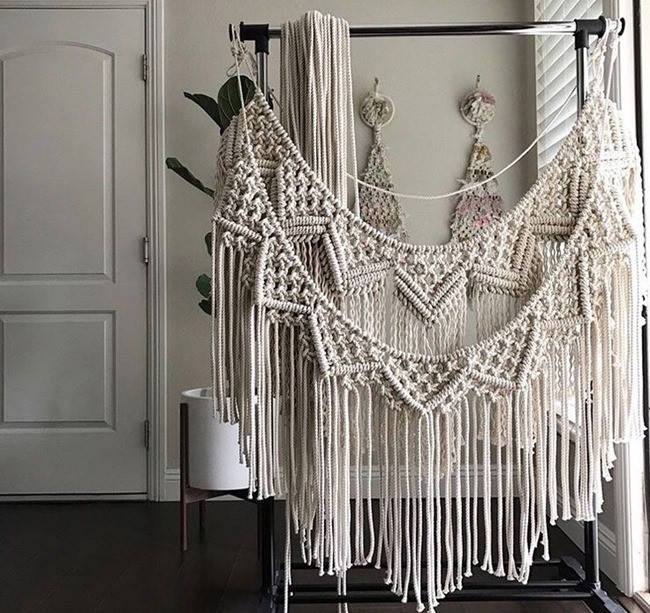
We have put together a collection of free macrame tutorials for beginners. In this article, you will find highly-rated, popular educational videos from the web for learning this knotting technique at home.
History of the Macrame Craft
In ancient times, crafts were made from animal hair and long grass. Initially, this technique was used to make fishing nets, which were first knotless and later twisted. Incan tribes used knot tying (known as quipu) to store information and perform arithmetic calculations. Later, knotting was used to decorate homes and clothing.
What You Will Need: Materials and Tools
A major advantage of knotting is its affordability. No special tools are required; all the work is done manually. The main materials are strong cords, threads, ropes, or thick ribbons. In the past, silk and woolen threads, along with gold wire, were predominantly used. Additionally, you will need a macrame board (or cushion), pins, a crochet hook, and scissors. The finished pieces can be combined with decorations such as amber, pearl, or wooden beads.
Preparation for Work
Preparing for your project takes a fair amount of time (about 10% of the whole process) and consists of several stages:
- Making a sample and determining the knotting density/tension.
- Cutting the working threads. When measuring, do not stretch the cord to avoid length discrepancies.
- Sealing the frayed ends over a candle or lighter flame, or securing them with glue or clear nail polish.
- Smoothing the threads over steam if they are wrinkled.
- Mounting the cords onto the base using one of the traditional methods (like the Lark’s Head knot).
- Shortening excessively long cords by winding them into bobbins or “butterflies” to prevent tangling.
Basic Macrame Knots: Step-by-Step Technique
There are many dozens of knots: tatting, square, double half hitch (rep knots), Armenian, Turkish, tie, Chinese, flat, and others. Repeating these elements in different combinations allows you to create unique designs. You need to tie the knots tightly, so only strong threads are suitable. Beginners will need to understand the basic concepts: the filler (base) cord, the working cord, and the mounting knot.
Macrame Wall Hanging (Panel)
Textiles in white and beige tones are a universal choice for any room. Brighter colors stand out from the general picture and attract a lot of attention. Despite its large volume, a wall hanging is quite simple to make. Any wooden plank can be used as a base, but a natural driftwood branch looks especially authentic. To prevent the ends from fraying, it is best to singe them with a small flame (if using synthetic cord). Alternatively, you can simply tie the end with a regular barrel knot and trim it neatly.
Plant Hangers for Potted Flowers
https://youtube.com/watch?v=aDJIDEfM19o
Hanging planters for flowers are the most popular macrame items. Lacy plant hangers give potted plants a lighter, more delicate look. It is important to ensure your knots are the same size and to maintain consistent spacing so that the craft turns out symmetrical. If the plant hanger is meant to be kept outdoors, you should opt for wear-resistant synthetic materials. A long, brushed-out fringe adds a special touch of chic.
Macrame Keychain
You can create almost any design: a heart, a snowflake, or a fantasy ornament. The advantage of a macrame keychain is its lightness, flexibility, and pleasant tactile feel. The project takes a minimal amount of time. For the hardware, you can use a regular key ring, a carabiner, or even make a loop yourself from the cord.
Double Half Hitch (Rep) Knots
https://youtube.com/watch?v=-ZTnkdJp6Es
This looks similar to a single knot. Sequential repetition creates a voluminous ridge or line — a sennit (which can be horizontal or diagonal). With a clever combination of these knots, you can create textured patterns that look great in jewelry when paired with twisted threads. This element can be worked horizontally, vertically, or diagonally. By tying just a few of these knots, you can create original jewelry in boho, hippie, and oriental styles.
Square Knot
Also known as a flat knot or double flat knot, it can be tied in two ways. If you need the vertical bump (the lock) on the right, you start the knot with the right working cord; for the lock on the left, you do the opposite. The resulting fabric looks similar to crochet or knitting. It can be used to make all kinds of items, including wardrobe pieces like bags, stoles, and tops.
Macrame Interior Coaster (Napkin)
Macrame napkins used as hot pads, vase coasters, or mats for figurines are a beautiful addition to retro, vintage, Provence, kitsch, or classic interiors. The simple shape and small size make them ideal for your first acquaintance with the technique. Unlike most other crafts, the start of the work differs here, as the cords are mounted in the center (working outwards in a circle).
Macrame crafts look very elegant and are highly durable. They fit perfectly into any interior and make wonderful handmade gifts for family and friends. Furthermore, this activity develops fine motor skills and serves as an excellent calming therapy.