The Tiffany style became popular thanks to the cult classic film “Breakfast at Tiffany’s” starring the legendary Audrey Hepburn. Clothing, interior design, party and wedding decor, and everyday objects are inspired by the atmosphere of 1950s New York, presenting a mix of retro luxury and refined charm.
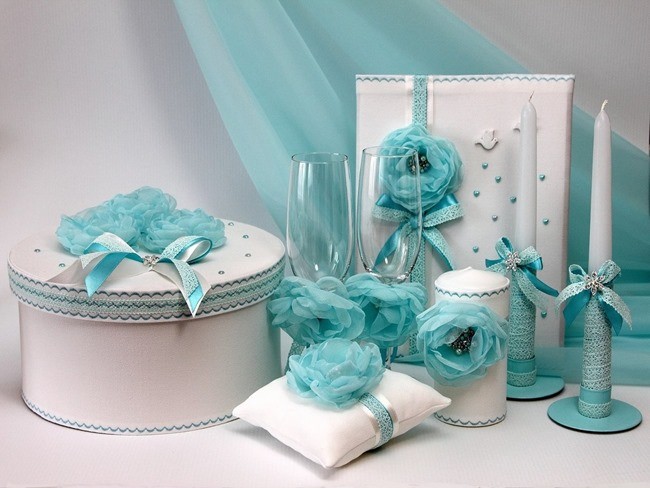
Video tutorials on Tiffany-style decorating at FreeHandmade.com will help you understand the main features of this trend and teach you how to create characteristic, beautiful items.
Key Features of Tiffany Style
Emerging as a branch of European Art Nouveau, the Tiffany style has a distinct American character:
- primness and respectability;
- absence of excessive decorations;
- bright accents against calm pastel tones;
- use of handmade elements;
- simplicity and luxury combined in one package;
- comfort and functionality.
Tiffany Color Palette
The main secret of the style lies in its recognizable palette: a combination of rich turquoise with black, white, beige (cream, sand), and chocolate. This contrasting color scheme can be used in the design of an entire room or within a single item. For decorating small objects, it is enough to use only turquoise and combine it with other elements in brown and black-and-white colors. Bright spots enliven every piece of the interior and give a special mood to the room.
Why Turquoise?
The main color — turquoise — has been the signature hue of the Tiffany jewelry company for many years. Back in the 19th century, the brand patented its jewelry packaging (the iconic little blue boxes) as a successful marketing move. The shade of the sea wave, which includes two bright tones (blue and green), is associated with nobility, romance, love, and spiritual beauty in many countries. Unlike many other bright colors, turquoise does not tire or strain the eyes.
Characteristic Tiffany Patterns
The American 50s and 60s were all about rebellion and bold futurism. In visual arts, Pop Art and Andy Warhol were at the peak of their popularity. Hence the popularity of optical illusions and exotic motifs. An interesting solution is the combination of prints (black and white stripes, plaid, zebra, polka dots, houndstooth, geometric abstractions). Floral ornaments, ornate lines, and whimsical patterns will also fit perfectly. Such colorings often act as a background for other objects (walls, textiles, furniture upholstery).
Combining Contrasts
This trend implies a combination of modernity and vintage in one space. Retro accessories (vases, candlesticks, mirrors, frames, clocks) act as accents against a familiar background. Extraordinary chic is achieved through the juxtaposition of the luxurious with the aged (shabby chairs next to new leather furniture, faded paintings above a solid glossy dresser). A special effect is produced by combining matte and glossy surfaces. Everything should look cozy yet solemn at the same time.
Super Creativity
An interesting feature of the Tiffany style is originality, super-functionality, and individuality. Remember Holly Golightly’s apartment (the main character of the movie): a sofa made from a sawn-in-half bathtub, suitcases instead of traditional furniture, shoes kept in the refrigerator. Everything speaks to the hostess’s creative nature and unconventional thinking. The impression is enhanced by the lack of symmetry and an abundance of smooth lines in the compositions.
Which Techniques to Use for Tiffany Style Decor
Decoupage is one of the trendiest and most suitable needlework techniques for an “antique” stylization. Additionally, geometric patterns and stucco (made of plaster or polymer clay) are widely used. The method of painting surfaces with an aging effect (using soap or a wax candle as an intermediate layer) is also highly popular. Appliques and painting in a suitable color scheme will work perfectly. For hardware, crafters often use small clothespins, buttons, bows, lace, rhinestones, and beads (hinting at precious stones), as well as small metal details (keys, hearts, rings, or any tiny vintage figures).
What to Decorate
One of the distinguishing features is an abundance of paintings, panels, and desk or wall frames. Photo frames can easily fit into any environment, combining with various design solutions: boho, kitsch, Provence, rustic, country, shabby chic, modern, and even loft. It’s hard to imagine a typical American hall without a stylish lamp, floor lamp, or clock. You can also stylize any everyday items (organizers, jewelry and trinket boxes, books and diaries, candles, wine glasses).
Sleep Mask
One of the cult items that won universal love is the funny eye mask. The heroine of the film stayed up late, and this accessory helped her sleep sweetly until noon. Such a useful thing can be made from a piece of felt or thick fabric and an elastic band. An important detail is the cute decoration with gold braid, cord, and fringe, just like on Venetian masquerade masks. Golden touches add a hint of luxury to any item.
Stained Glass
The stained glass technique with elements of colored glass mosaic was invented by the son of one of the founders of the Tiffany company, who was engaged in art, design, and decoration. Lampshades, wall mosaics, and chandeliers in stained glass design perfectly fit into the overall style—bright, individual, and elegant. With the modern assortment and availability of materials, any element of stained glass can be made independently, relying on online masterclasses.
Tiffany-style—a striking manifestation of American Art Nouveau—epitomizes impeccable taste. Freshness, modernity, individuality, and an expensive look are the reasons for the trend’s enduring popularity at all times.